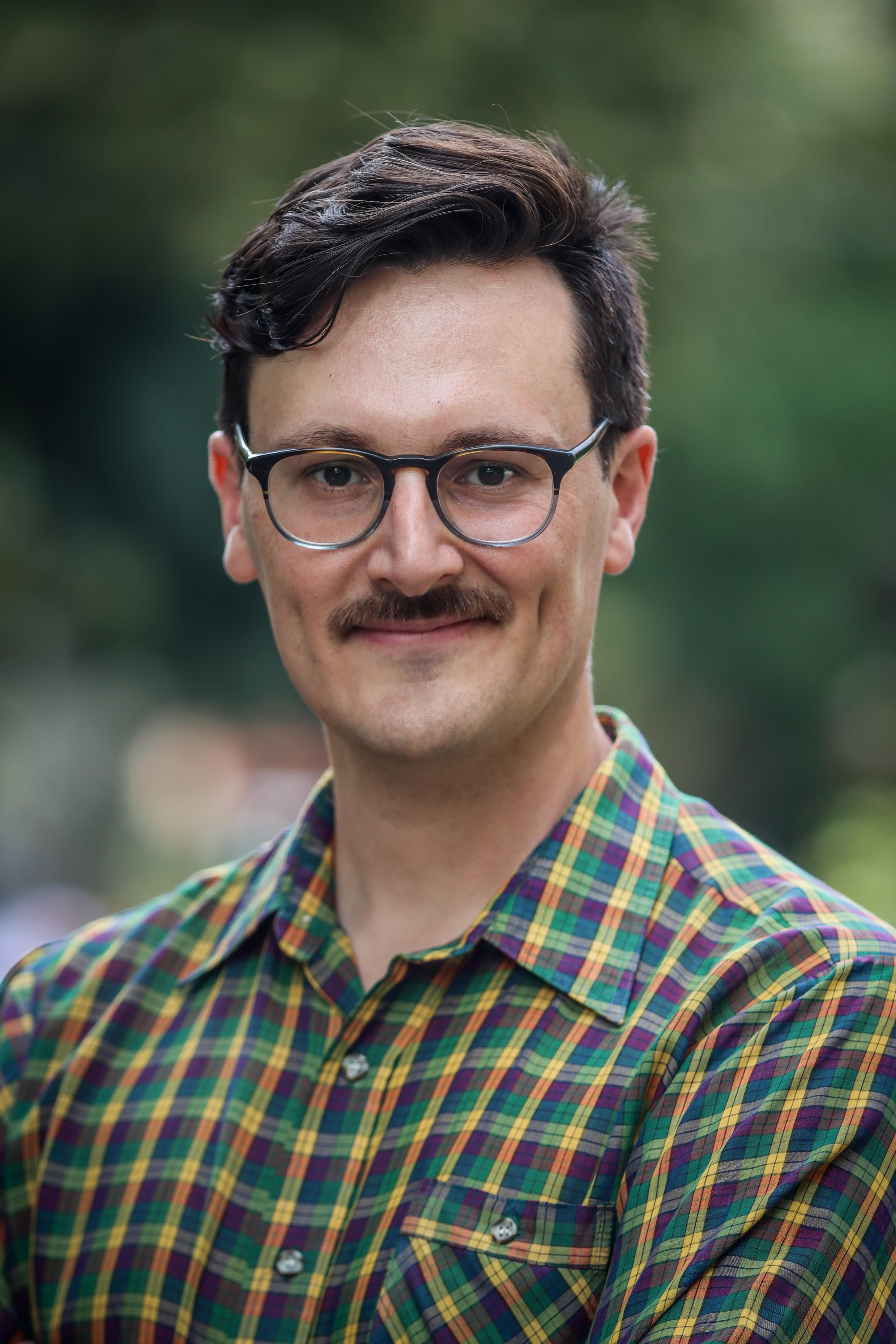
Review of Megan Boyle’s new poetry.

I’ve been struggling with literary criticism. The reviews I’ve written have mostly felt attacky and awkward, as if I’m in the philosophy department arguing about truth, only its literature. This review of Megan Boyle’s new poetry book from Muumuu House on Full-Stop is different, I think. At least its an attempt to write criticism I can feel good about.

What were doing at Times Square

When we all went to Times Square
we didn’t really do much
we stood close to one another
we danced sang chanted screamed

and we stood on the other side
of fences the police put up
but we didn’t break them down
we just looked at the police
and the police looked at us.

This is what we went there to do, I think:
Look at the police together.

One time we were hitting around a beach ball
with 99%! written on it
and it fell into the street
where a bunch of police were standing
and at first the police didn’t look at it
they seemed nervous to get involved
but then one of them smiled and shrugged
and hit the ball back to us.

We cheered and cheered and clapped and laughed
and chanted “YOU SHOULD BE HERE WITH US!!”

That’s what we were doing at Times Square.
That’s why we do anything at all.

US IS THE IS OF THIS POLIS: a poem for Occupy Wall Street

What we demonstrate when we demonstrate
is a logical argument.
It is most logical argument any of us can think of.
We demonstrate that this is our polis,
that we all have power
to make good decisions
and that recently some of us have made poor ones.
We assert a major premise:
US IS THE IS OF THIS POLIS.
And a minor premise:
THIS POLIS HAS DENIED US US.Therefore, our conclusion is
WE WILL BE US.This conclusion is a culture
and culture just is us
all together all over the world.
Every person living life.
So we don’t really have ‘demands’.
But we can generate some little proposals
consistent with our conclusion.

For example:
First, regarding the money civil society gave to its banks.
Its location must be revealed. Where is the gift we gave?
This was a public gift
a gift for all of us.
So we ask that those who received the gift
tell us where it is
and what it was used for.
It is ours too.
$787 billion.
We propose that those of our polis who received the gift
use it to relieve debt throughout the polis
and employment and infrastructure projects
and other reparations for damage done thus far.
Second, regarding future ‘economic crises’
like the one that necessitated the aforementioned gift.
There will be a new court system
that decides whether economic transactions
of a certain size
that affect a certain number of those in the polis
are just or unjust.
It will be an economic court system
with lawyers for both sides
and judges
and a jury of peers
so all the fathers and mothers and children
anywhere in the polis
–which is everywhere, not just here–
can live and grow together well.These are little proposals
and we can make more. So many more.
as many proposals as there are humans being.
Because that’s what we are doing.
We are demonstrating
that we are.

Smartphones

I use a flip phone. My parents recently got smartphones. Droids. Then they got new smartphones. It’s part of the family plan. My mother gave me her old smartphone. She said “here, switch over to this one. I’ll pay for the data plan.”

Data plan.

At first I said no. Then I said yes. Then I looked at my girlfriend. I said no again. I said yes. I said no. My mother rolled her eyes. We were going to Rosh Hashanah services. We wore suits and ties. She said, “We’ll go to the Verizon store after services.”

I stood with the smartphone in my hand. “Okay,” I thought. “This is going to happen eventually and I can’t help it–all my friends have them–and I can use it for various things. Tweeting. I’ll use it to tweet. I have four Twitter accounts. I can pay more attention to them. And getting lost. I won’t get lost. I’ll know where I am. And a calendar. I screw up appointments a lot. This will help me that.”

Then I asked myself, “this is late capitalism, right?”

Then I answered, “Yes. It is.”

I stopped. I decided to do something that cellphones and smartphones have made extremely popular among my peers: I decided to decide later.

I asked a philosopher friend if I should get the smartphone. He said no. Smartphones make you less smart. The capacity for memory, the interest in living questions, the constant (mis)direction of attention away from the present moment–just don’t. You don’t want to mess with that. You’re better without it.

I already have an iPad. I stare at it for hours. Every day. Mostly reading PDFs I download for school. Hobbes, Plato, Foucault, etc. This week it’s Adam Smith.

I see people walking down the street on their smartphones. I see them eating dinner, the smartphone sitting in front of them next to their food. I see them playing games on their smartphones on the train. Reading the newspaper. Checking email. Facebook. The New York Times. The best tweeters I know couldn’t do what they do without a smartphone. Richard Nash. Andy Carvin. Also Maud Newton made this connection: ancient humans used to carry smartphone-sized tablets with poetry and scripture carved into them. In Cuneiform.

Smartrocks.

I can see them walking around in cloaks and sandals with their faces hunched over their smartrocks after written language became vogue. The people that thought too much probably got nervous and talked with their friends about what they should do. Should we trust writing? Should we trust these scratches that everyone in the market is staring at? What will happen to our memory? What will happen to the truth of voice, of sound, of memory? Plato wrote a whole Socratic dialogue about it called Phaedrus.

Then he will not seriously incline to “write” his thoughts “in water” with pen and ink, sowing words which can neither speak for themselves nor teach the truth adequately to others?

Should I trust this smartphone that can neither speak for itself nor teach the truth adequately to others?

Marshall McLuhan says media technologies are ablated mental states. It’s like a slice of my mind fell onto the table one day after breakfast and kept doing whatever it was doing when it was in my brain. It turned into writing, a telegraph, a telephone, a television, a computer. When I stare at the computer and write it’s like when people used to sit and think about Homer’s poetry. Now I can hold whatever was happening there in my hand. I can push its buttons.

Obsessing with technology is just self-obsessing. It’s narcissistic. But it’s just like any mental state. I have the option to be well-disposed towards it. If I get angry when I’m walking because I hate when people pull their dogs while they’re trying to pee, and I obsess over that anger, it’ll consume me. It’ll ruin my day. It’ll make me be a jerk to the dog-owner, who might need a gentle reminder, sure, but not my sass. Other people don’t deserve shitty treatment because I can’t deal with myself in a non-shitty way. Same with smartphones.

We’ve been dealing with this problem for a long time. How do I treat myself well around other people? How do I not become obsessed? How do I reach a balanced happiness? How do I lead a good life? Etc.

Will a smartphone lead to a good life? I don’t know yet. The smartphone arrived  like anything else from the universe. A stubbed toe. My father’s laughter. A death in the family. A political debate. A fungus on my little finger. A love poem.  Do any of these lead to a good life?

They’re just life, I think. What makes a good life is a good me in life. Can I be a good me in life with a smartphone? I hope so.

Yesterday morning I woke up and my phone wasn’t on. I always leave it on to wake me up in the morning because I don’t trust myself to wake up at the right time without it. I tried to turn it on. It gave me a message:

“Please use genuine battery power or phone will shut down.”

Then it gave me a count-down. 10 9 8 7 6 5 4 3 2 1. Then it turned off. It did the same thing when I tried it again. I spent the day without a phone. I panicked. I went to the Verizon store after I inadvertently stood a friend up for lunch.  They said it was water damage. That I’d have to get a new phone. They asked me, “Do you have a phone we can transfer your information to?”

I said, “Yes. I have a smartphone.”


Lost Gallery of Doors, two images

I started a project a little while ago called Lost Gallery of Doors. I’m going through a huge online magazine archive and searching for literary magazines that feature artwork, preferably from the late 90s and early 00s. I haven’t worked so much on it recently but I thought I’d feature an image or two here that I really like from what I’ve found.

Both of the following are from the Art Bin, a magazine that went under in 2003, I think. Their stuff is incredible.

This is from a series by Max Klinger. Each panel in the series depicts people interacting around dropped gloves.

Also from the art bin, part of a series of collages by Edvard Derkert.

I feel weird about Internet writing.

I recently met someone who knew me through my online writing. When he shook my hand he said “Wow, I thought you’d be fatter and angrier.”

This is the best comment on my writing I think I’ve ever received. It stuck with me. I thanked him for saying it. Rereading some of my online writing I realize I come across like a fat, angry person.

Why am I fat? Why am I angry? Because my entire life I’ve wanted to “be somebody” in the literary world. I’ve wanted to “be discovered.” I’ve wanted to write a novel and get reviews in the New York Times and write essays and fiction for Harper’s and The New Yorker and the Atlantic. I’ve wanted to be a trusted, respected voice in literature.

I track this desire back to school. In school everyone sat in rows hunched over books adults made us read. Everyone read. I sat at my desk, shoulders curled over the books. I carried their weight in my backpack, reading and reading and reading, all the adults in my life rewarding me for reading more, writing more, and at “higher” levels.

Later on literature provided an opportunity for reflection and escape from anxiety. But while it might have been an opportunity for me it was also a ball and chain.

So my guess is that, to some degree, I want to write words that others would be forced to read and think and write about. I’ve hoped that someday my words would be what everyone around me would have to hunch over and study.

I wrote fiction at a very young age and submitted it to the magazines my parents had on their nightstands, the ones they respected the most.  I wrote a novel. I continue to try to get it published. I submit short stories. I write for online magazines. I do these things, to some degree, because if I get enough published and I become a writer I’ll finally have my revenge.

This is a hateful attitude towards literature. Somewhere deep down I actually hate it. And that hate comes out in my online writing, where–it seems–I come across as a fat and angry person.

So I haven’t been writing much online, particularly criticism. I feel weird about it. I’d like not to be a fat and angry person. I’d like to be less angry, at least, and then work on losing weight.

Not sure how, though.  Any thoughts?


Swink publishes first Facestories

Swink has published “Eight Facestories,” a selection of eight very short stories that I first wrote as status messages on Facebook. Thanks to Darcy Cosper for including these weird little pieces with the likes of Deborah Kay Davies and Yannick Murphy.