Category Archives: Uncategorized

Title 1 Funding: An MMT Approach

I spent a good chunk of time the last few days sitting at my desk and twirling my pen, staring out the window. I was trying to figure out how I would propose reforming Title 1 funding.

When it comes to left reform in public finance I’ve been influenced by Modern Monetary Theory. In my own reading of the paradigm, it’s a shift away from austerity brain. It breaks through restrictions on thought, debate, and imagination that lead to poorly funded programs.

MMT is more about provisioning. When I think through that lens, I start asking questions like: How can we provide people with what they need? What would it take? It’s about generosity rather than small-government balance-the-budget fastidiousness. It’s not about taking or cutting. It doesn’t ask what we have to tax or slash. (That comes later, if necessary, according to specific criteria.) It doesn’t make incorrect presumptions about inflation or insist on staying stuck in 1980s politics. The bottom line for MMT is provisioning the people.

So I’ve been sitting here thinking what a provisioning-approach would recommend when it comes to federal education spending for poor schools and districts through Title 1A of the Elementary and Secondary Education Act, originally passed in 1965 as part of the War on Poverty.

Here’s what I came up with.

The three As

Like I’ve written about before, Title 1 has three key components (which weirdly all start with the letter A): appropriation, authorization, and allocation.

The appropriation is the amount the government devotes to the program. It’s the pot of money that’ll get spent on schools where there’s high poverty. The most recent appropriation was $14 billion. Democratic presidential candidates from Bernie to Warren to Biden all called for exponential increases to this appropriation. Warren wanted to quadruple it, Bernie and Biden to triple it.

But the appropriation is just one part of a complex apparatus. The next part is authorization, which is arguably just as important as the appropriation. This is the amount of money authorized for each state or local education education agency (LEA) according to the law’s four formulas. These formulas calculate different amounts of grant funding to compensate for poverty: basic, targeted, concentrated, and education finance incentive.

After more than fifty years of debate, compromise, and patchwork changes these formulas iterate on top of each other. The big question in the history of these formulas was what ‘poverty’ really means qualitatively and quantitatively: is it neediness, income, number of poor families, percentage of poor families, etc. The urban/rural divide, along with the push-pull of spend/don’t spend ideologies from Republicans and Democrats rendered the weird mosaic of distributions used today. Here’s how each works:

  • The basic grant, which was the first, is calculated using a state’s average per pupil expenditure and the number of poor children in the state. The federal government pays 40 cents for every dollar the state spends to educate poor kids. There are also thresholds for minimum and maximum basic grants, to make sure every state gets a percentage of the national average per pupil expenditure.
  • The concentration grant is calculated by factoring the number of poor kids above a certain rate of poverty into the basic grant.
  • The targeted grant is calculated by weighting certain aspects of the concentration grant differently according to geographic distributions of poverty.
  • The education finance incentive grant is calculated based on state effort in order to incentivize states to spend more.

The authorized amount of Title 1 funds is thus what a state is entitled to according to these formulas (I’ve been dreaming of doing a technography of these formulas some day, which is like ethnography for but for algorithms).

But the authorized amount doesn’t take the total appropriations into consideration. A state could get a whole bunch of money, but if there’s not enough in the pot for every state to get what they should get, then you have to make changes accordingly. When you put the authorized amount in relationship to the total appropriations possible for Title 1 spending, you get the actual allocation made to each state.

I’m scraping around for metaphors to explain all this and I landed on birthday cake. Maybe it’s because Thisbe turned one recently. The appropriation is like the size of your cake. The authorization is the process you use to cut it up, put it on plates, and distribute the pieces of cake to everyone at the party. The allocations are the actual pieces of cake on each plate.

Call me allocation

So when thinking about an MMT approach to this mess, I ended up focusing on the allocation. What matters is how much each state gets. That’s the bottom-line. It’s the amount that states distribute to districts and LEAs (which, you should remember, includes charter schools) and thus the amount that gets into the school budgets.

It’s a given that schools need more money. Schools in districts with low property values need it especially, which includes rural and urban areas. So we have to increase the allocation. Intuitively then, it makes sense to focus on raising the allocation.

But reforms rarely do this. They focus on the appropriation or the authorization. Reforms to Title 1 are usually about the size of the cake or tinkering with how it gets cut up and distributed. Notice two things about this approach.

  1. First, it doesn’t focus on changing both appropriations and authorizations simultaneously. We should be increasing the size of the cake and changing the distribution process to increase how much cake we can give out. We can’t do one without the other. When you try to do one, you’re limited by the other.
  2. Second, this approach doesn’t focus on what really matters at the end of the day: what schools get. It doesn’t focus on the allocation.

So an MMT approach to Title 1 reform would say: focus on the allocation. What do we want schools to have at the end of the day? According to the most recent measurements, the average allocation nationally is a measly $1,227. When I do analyses for how much schools get from the federal government, it’s rarely above 10% of their total revenue.

So I say: let’s get that national average per pupil allocation of Title 1 funds up to $5,000. It doesn’t have to be tomorrow. But maybe in five years? At least?

What I like about this proposal is that it focuses on the allocation, but leaves the authorization and appropriations up to the policy process. What matters is that we get a bigger allocation. If that means making appropriations $100 billion, then so be it. None of this ‘triple’ or ‘quadruple’ business that limits the imagination.

But it also leaves open the possibility for changes in authorization as well. Maybe we need to shift the proportions of the minimums and maximums in the Basic Grant more. Maybe we need to add some coefficients to targeted and concentration grants. Whatever we have to do to get that average up, then let’s do it.

The reform uses the force of the law to inspire generous, provision-oriented thinking. It leaves the mess of the authorization apparatus in place. It removes the limitations that might inhibit bigger spending in the appropriations and ultimately focuses on getting schools what they need.
Think neoliberalism’s over? Consider Chester, PA.

There’s something happening in Chester, Pennsylvania. If you haven’t been following, a judge recently ordered that the school district consider proposals for a charter takeover of the district. There’s a lively debate over this happening in the Delco Times.

I recommend you look up Chester. There’s a lot going on there on the marketization terrain, including a proposal to privatize their water system. The city is a frontline in the continuing privatization of local government and services, even as the commentariat has been declaring the end of neoliberalism in the wake of the American Rescue Plan.

I was even seduced into considering this analysis, but Chester’s a great example of how short-sighted it is.

Anyway, you probably know I’ve been trying to understand how charter school finance works as part of my larger project of figuring out how school and capitalism relate to one another. I’m looking at school funding as a socialist (sign up for my newsletter here!). My method has been to read bond issuance documents, which are publicly available and contain lots of great bits of info beyond just the details on borrowers and lenders.

The largest charter operator in Chester is Charter School Management Incorporated, which runs 60% of Chester’s elementary schools as Chester Community Charter Schools. They’ve been recognized as a likely player in the takeover if it goes through. Their Board of Trustees authored the most recent letter to the editor on the Chester proposal linked above.

What I’ll do here is look a bit at CSMI and then refine that understanding with a 2010 issuance, the most recent they’ve done. The big question really should be: do we want this kind of apparatus running the Chester-Upland School District? Or do we want to go in a different direction? CSMI is an excellent case study in the kind of structures that govern and finance charter schools.

Mansions with bowling alleys

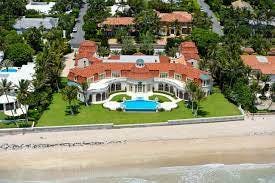
When I think about CSMI, I think about mansions with bowling alleys. That’s because a few years ago, the founder and CEO of CSMI, Vahan Gureghian, sold an $84.5 million mansion in Florida that, indeed, has its own bowling alley. Here’s the house:

Once Asking $84.5M, Oceanfront Mansion in Palm Beach, Florida, Enters  Contract - Mansion Global

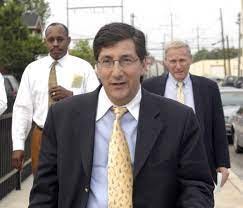
Look up Gureghian. He’s a Republican donor, a mover and shaker in Pennsylvania politics. His wife Diane is a lawyer that serves as legal counsel for CSMI. He looks like this:

Power Players: Pennsylvania's top political donors, 2011-2012 #5: Vahan  Gureghian

The Inquirer and then Diane Ravitch and the Washington Post all reported on an audit which found that Gureghian was paying himself $11 million in 2019, the same year he sold the mansion. He and Diane live in another mega-mansion in Bryn Mawr, PA. A regional mainstay, the Gureghians have given lots of money and time to education:

“Mr. Gureghian serves on the Board of Trustees of the University of Pennsylvania and the Board of Delaware County Community College. He is also a Trustee for the Villanova University Business School. Mr. Gureghian is also on the Board of Directors for the Philadelphia Regional Port Authority.

Through the Gureghian Family Foundation, Mr. Gureghian and his wife, Danielle, have provided hundreds of high school and college scholarships to promising Chester students. They are also responsible for donating for than $70,000 in Thanksgiving meals to residents of Chester over the last ten years, and giving $400,000 worth of holiday gifts to CCCS students.”

The other thing that’s been out there about CSMI was its Camden-based charter, whose renewal application was denied in 2017 due to low test scores. (Sidenote: I’m wondering what happened to their facilities. Who owns it now? They had buildings that underwent multi-million dollar expansions. Here’s their financial report from the year before they closed.) They operate Atlantic Community Charter School in Atlantic City, which still exists.

The treasurer

The most recent issuance from CCCS was in 2010. That’s a long time ago. But I did see a note from Fitch’s rating service talking about these bonds late last year. That’s because last year was a ‘maturity date’ by which the borrowers had to pay back a certain amount of the loan. They did, so Fitch’s was like “okay cool.” The next maturity date is 2030.

It was a big loan, nearly $50 million in principal. The bond was issued by the Delaware County Industrial Development Authority on behalf of the Friends of Chester Community Charter School, a nonprofit supporting organization formed for the purchasing, financing, and operating real estate for the school.

George Fieo is listed at FCCCS’s principal officer, since he signed their 990s in 2019, with gross receipts of almost $4.5 million. Fieo is Delaware County’s Deputy Treasurer, the Borough of Norwood’s treasurer, and a partner at an accounting firm. I guess sometimes he goes by Giorgio rather than George, since he’s listed here as making around $90,000/year in his official capacity. He looks like this:

George Fieo

Sort of interesting that he’s both the Deputy Treasurer of the county and the principal officer for the organization that acquires and maintains real estate for the charter operator. It also looks like he paid himself $3,200 for something from FCCCS coffers. Wonder why.

Peter Seltzer is the President of FCCCS’s board, serves on Atlantic CCS’s board, and was a former City Councilman in Chester. ACCS’s website says he’s an insurance broker with his own firm called Seltzer and Associates, though I can’t find much about him in general.

Owner and CEO?

When it comes to the buildings though, the issuance says that

“The Charter School currently leases a portion of the Facilities, consisting of five elementary schools, two middle schools, two gymnasiums, an administrative building, a maintenance building and two pad sites, all located on two campuses, the East Campus and the West Campus from Vahan H. Gureghian pursuant to several lease agreements,” who also “constructed the Facilities employing conventional financing.”

This means that money from the bond issuance went from DCIDA to FCCCS to Gureghian directly. Indeed, he’s referred to in the issuance as the Owner, since he owned the school’s facilities.

The deal was that the School and DCIDA would purchase the facilities from Gureghian for $50.7 million, using the lion’s share of the bond (the rest of the money goes to a debt reserve fund and the cost of issuance, which is usually around $1.5 million). “The Borrower and the Charter School intend to execute a Purchase Agreement on the date of closing on the Bonds for the purchase of the Facilities at a purchase price of approximately $50,700,000.”

It makes sense, since the yearly gross receipts of the 990 tax form come out to about the yearly rental costs for the facilities reported in the issuance. It’s about $4.4 million/year.

Remember that Gureghian is the CEO of CSMI. So the CEO of the operator owned the building as a private individual. The DCIDA took out a huge loan from an anonymous cabal of ruling class people, gave it to FCCCS (directed by Seltzer and Fieo) who then purchased the buildings from Gureghian. Gureghian made $50 million on the deal, leaving the other orgs with the debt to pay back. The money just went right into his account as the Owner.

Keep in mind, this was a big real estate deal: “five elementary schools, two middle schools, two gymnasiums, a maintenance building, an administrative building (to be used by CSMI, LLC pursuant to its Management Agreement with the Borrower), and two pad sites located on two campuses, the East Campus and the West Campus.” All of it totaling 248,802 square feet. These were deeded to FCCS, who I imagine now owns them given their 990 form.

The Charter takes in revenue from tax grants through the district’s property taxes and state grants (and other sources). If I’m getting this right, then the circulation goes something like: CCCS gets its revenue, pays it to FCCCS, who then pays out money to DCIDA to refund the bond over forty years.

Fieo can skim a little for himself off the revenue since he’s doing all the paperwork, working on the inside from Delaware County. Guerghian took the loan money in 2010. Maybe it went towards the mansion with the bowling alley? Who knows.

Charter School Tax Haven

This is part 5 of a series on String Theory. See the other parts here!

Instead of a relevant image or graph, please enjoy this water color done by my aunt Donna. She’s a great painter.

We’ve come a long way in this series on String Theory and we deserve some good colors, calm scenes, and feeling.

In this final post, I want to talk about exemptions and wrap things up.

Exemption!

Like I said in a previous post, the bond issuance from 2020 is repetitive. Another thing is repeats a lot is that the borrowers (in this case, the DeMedicis)operate exclusively for charitable and educational purposes including making distributions to organizations that qualify as exempt organizations under Section 501(c)(3) of the Code. This includes providing facilities, land, and improvements for the benefit of Philadelphia Performing Arts: A String Theory Charter School.

They’re super clear: this real estate development scheme is done by and for charitable and educational purposes only. Everyone on the school side is non-profit. This is super important because it means everything in the deal is exempt from all kinds of taxes at the local, state, and federal levels. Ballard Spahr put their seal of approval on this.

What’s exempt from what?

Importantly, the interest payments on this bond—the payments that the borrowers send to the lenders, who are lending this money and get it back with interest—are:

  • excludable from gross income for purposes of federal income tax, assuming continuing compliance with the requirements of the federal tax law.
  • exempt from Pennsylvania personal income tax
  • exempt from Pennsylvania corporate net income tax

The buildings themselves are currently “exempt from real property taxation” at the local level also, and the DMs are required to maintain federal tax exempt status as educational/charitable organizations. If they don’t keep this status then it “might trigger a challenge to its Commonwealth income tax exemption,” which means the lenders would have to pay taxes on the interest payments and String Theory would have to pay some taxes on the real estate.

One thing they’re trying to avoid here is the situation where “the assets of either to inure to the benefit of private individuals.” In other words, Javier Kuehnle running away with $65 million of Philly real estate. There’s a little treasure trove of legal protections in place to make sure this doesn’t happen. None of this illegal technically (though it should be), and it might be sort of unlikely, but it’s a really bad look.

Plus, it gives Javier Kuehnle a lot of power locally, whether or not he actually can or does cash in on it.

It’s this whole business, combined with the fact that they take from existing district revenues and treat teachers like crap and a lot of other things, that make charters so reprehensible. But how to sum all this stuff up?

Whew

For now, I hope I’ve shown that String Theory is a real estate development corporation. But it’s also kind of a tax haven. Bondholders can park their money in the charter and get tax-exempt interest payments from it. But also private individuals can control sizable real estate development projects in other tax exempt ways, sending all kinds of money to all kinds of consultants and other capitalists.

The thing is, a lot of school districts are tax havens also. It doesn’t distinguish String Theory from traditional school districts to call it a tax haven. What does distinguish it is what kind of tax haven it is.

Whereas most wealthy districts exploit resources through property taxes and inequalities in their regions, String Theory exploits the school district itself, from within the school district.

Whereas traditional school districts are a very sturdy state apparatus (they’ve been around since the Puritans!), the String Theory is new and fragile. It could very well go under like many other charters.

And this brings us to maybe the most important feature of this tax haven. Whereas school districts are led by elected and appointed officials firmly embedded in municipal government, as well as state and federal government, the String Theory Development Corporation is run by a very particular set of individuals. These individuals, namely Javier Kuehnle, control a lot of real estate. There’s only cloud of legal designations and shady entities between Kuehnle and the $65 million of property he controls. To unseat him and the other board members is quite difficult.

In traditional school districts, elected school boards, superintendents, mayors, and assessors distribute their power when controlling school district finance. This ruling class bloc tends to be more diverse, though this guarantees very little. The structure is overall a pretty good thing, since school districts are so intimately wrapped up with property and family.

I don’t like this traditional school district structure (which is not without corruption), but at least it’s tough and includes some democratic accountability. I can’t abide the apparatus of charter finance. It’s absurdly complex, as this series of posts has shown. And I don’t think this group of ruling class people are especially trustworthy when it comes to running schools.

One question I’m left with after all this is dialectical. What’s the dialectic pointing towards here? I don’t think the old school district is going to survive and frankly I’m not sure it should. The charter structure isn’t nearly as sturdy, meaning that’s it’s a transitional apparatus itself. So what comes next? What can we dream of? What can we push for as socialists at this moment in the conjuncture?